• Software Development Outsourcing

    Software Development Outsourcing

    An actively growing outsourcing software development company that provides professional software outsourcing and custom software development.

  • Java Application Development

    Java Application Development

    An offshore Java development company, offering professional custom Java application development services, Java software development services and enterprise solutions.

  • Mobile Application Development

    Mobile Application Development

    We provide mobile application development services for Android, iPad, iPhone, BlackBerry and Windows phone. Also having expert team of mobile developers.

  • Asp.Net Application Development

    Asp.Net Application Development

    We provide Asp .net development, .net application development done by the qualified Asp.Net developers for dynamic web sites and other web portals.

  • Quality Assurance And Testing

    Quality Assurance And Testing

    We are leading business process outsourcing software development and quality assurance testing to provide businesses with an objective view of their software.

  • Website Design And Development Company

    Website Design And Development Company

    Is a professional web development company, offshore software development, website design and provide outsourcing for custom mobile application.

Showing posts with label Java Application Development. Show all posts

How Is Java Knitting Rapidly Into The Embedded Space?

0 comments
The "Java" family of technologies has always been considered on the apex of all software technologies. Owing to its salient features, such as flexibility, open source nature, compatibility, ease of use, adaptability and many more, Java has always been interweaving itself into multiple latest happenings, frameworks and architectures. Java Application Development has been pervasive in the embedded space at a very rapid rate. Java has been chosen as the apt language for embedded devices owing to the continuously increasing complexities in the software arena.

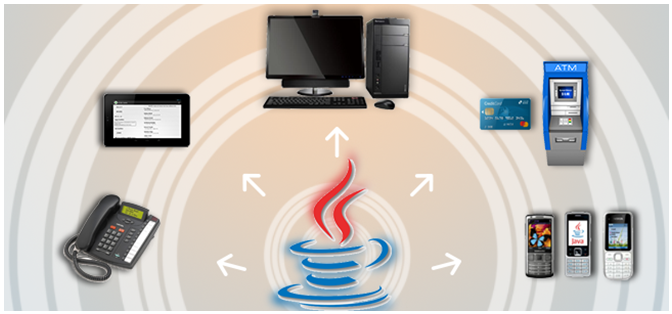
This embedded technology is woven into devices and systems, ranging from chips (on credit cards or ID cards) to bigger server class instruments to home driven equipments and is tightly coupled with the device. It brings about a real time experience for the user. Today, there are many daily usage devices based on this technology and Java is spreading its embedded wings into devices like SIM cards, printers, bank machinery, mobile handsets, TV, AC to name a few.

Java Embedded is usually not available for direct download or installation to users. It is based on an integration mechanism by the electrical / electronic manufacturers, directly on the device.

Why is Java Embedded getting so popular and in-demand?
    • Since it is highly functional, trustworthy, convenient and secure, Java Embedded tends to get attracted to solution providers at a breath taking pace.
    • It is bound to improve product quality.
    • Presence of standardized class libraries is bound to increase productivity and decrease rework.
    • It can encompass small as well as large embedded appliances.
    • One of the major highlights is its portability because of its OS independent nature. Hence, code written once can easily be ported on to any type of hardware.
    • Ensures good quality and higher performance.
    • Bound to reduce the Total cost of ownership and thereby fasten processes.
    • Higher level of code modularity and OOPS concepts lead to development of a robust and scalable software application.

How is Internet of Things (IoT) Imbibing Java Embedded?
 http://www.spec-india.com/services/java-j2ee-struts-development.htm

Internet of Things (IoT) is a concept creating waves today, in the industry, encompassing not only companies but homes too. It can be explained as a network consisting of material units which are connected via various wireless mechanisms. Their units have inbuilt sensors and embedded technologies and this is what they use to sense and communicate. Owing to IoT, daily utility things are connected the Internet and are being stuffed with intelligence. It is wondrous to see how these devices are able to talk to each other digitally and centrally, ensuring higher efficiency in quality, security and cost savings.

SPEC INDIA, an ISO 9001:2008 software development company, has its proficiency proven in Java Application Development with numerous projects and applications successfully implemented world-wide, for a wide range of clientele. Its experience in creating n-tier applications with MVC technologies giving Java / J2EE development services, has been remarkable. Java Embedded is an area in which SPEC has proven its presence.


Read more

An Overview of Cryptography

0 comments
Cryptography is the algorithm or process of encryption of plain data to cipher data and decryption of cipher data to plain data. A secret key(s) is used in this process and the length and type of keys are varies depending on the algorithm we choose.

Everyone wants their message is transfer over a network securely. Encryption also needs as it is required by organization or country law. There are many organizations and country having law that people may not share/upload data on FTP or cloud without encryption.

Basically, there are two type of cryptography is being used: Symmetric cryptography and Asymmetric cryptography.

Symmetric cryptography

It is one of the ways to encrypt the plain text and decrypt the cipher text via common/secret key. In this algorithm common/secret key is shared between all concern parties, so they can encrypt and decrypt the message with same keys.

Advantage of this approach is that implementation is simplest and faster than the asymmetric cryptography. However, main drawback is that we have to share the key securely between concern parties.


There are various symmetric algorithm available and it can mostly be classified in two categories : Stream and block cipher.

DES (Data Encryption Standard), Blowfish, RC4, AES (Advanced Encryption Standard) are the commonly and widely used symmetric algorithm.

Asymmetric cryptography

Asymmetric cryptography/encryption, also called as public key cryptography/encryption, is another way of encryption and using the key pair (public-key and private-key) instead of only one key in case of symmetric cryptography.

Here, public-key is used to encrypt the message and private-key is used to decrypt the message. Public-key may be shared to the users to encrypt the message. However, only authorized user who have corresponding private-key can decrypt the message. No one can decrypt the message if they have only public-key.


Advantage of the public-key is it is more secure than symmetric cryptography. However, it is much slower than the symmetric algorithm.

RSA (Rivest Shamir Adleman), ECC (Elliptic Curve Cryptographi) and Digital Signature Algorithm (DSA) are the widely used asymmetric encryption algorithm where public-private key pair is being used.

Public cryptography generally used 1024 bits long key. However, now a days key with 1024 bits length is not considering secure. However, increasing key length slow down the encryption/decryption process. So there is a trade off to choose the correct length of the key pair. Currently, 2048 bits long key is widely accepted and used.

Digital Signature Algorithm, is used to verify the sender. Here, sender and receiver respective keys to sign and verify the message. Sender digitally sign the message using his private-key. To make sure that the content is received of the correct sender, receiver verify the signature using corresponding public-key of the sender.

SPEC INDIA is a leading Java application development company from India, specialized in Java and J2EE technologies that provided best software solutions for all type of business. Such high-performance, flexible, future-ready, platform-independent software solutions are built using proven software development methodologies and best practices in architecture.


Read more
0 comments
In Java programming, a common type of search space is described by a Graph. Typically, a graph is a set of nodes and links. The nodes contain the following data:

> A name and/or other data
> Zero or more links to some other nodes
> A position in space

The links which fall in between the nodes are often referred to as edges in Java programming. The short algorithms and programs which are used in finding paths in graph are very similar to finding paths in a 2D maze. The primary difference here is the operators that allow the Java programmers to move and hence execute the code from one node to another.

At SPEC INDIA, we are well-equipped with a trained team of around 60+ Java programming professionals with an average experience of 2.8 years per engineer.  Feel free to post us your requirement at our email id lead@spec-india.com and our Business Development Executive of the concerned department will get back to you within 24-48 hours.

Happy Java programming!


Read more

Advantages of using Liferay Portal

0 comments
Liferay portal is a free and an open source enterprise portal written in Java technology.

Liferay portal is specifically used for building powerful intranets and extranets for corporate. It allows the users to set up features which are common generally to the websites. As such, no specific programming skills are required for basic website installation and administration. It is capable of running Java Runtime Environment and an application server.

Here are some of the direct benefits of using Liferay platform:
> Each Liferay portal user is given a set of personal pages that are easy to customize to specific tastes and needs
> Most of the things are coming in-built with the Liferay platform
> It’s easy to use. With just a few clicks, one can make changes to the look and feel, portal configurations, themes, and page layouts
> It is compatible with all the major operating systems
> It is open source
> One can trust Liferay to ensure the confidentiality of the information
> Liferay ensures no additional budgeting for support software. It runs at your existing environment
> Integration of any enterprise application is made easier
> One can smartly run the other applications in Liferay too

At SPEC INDIA, we have build a classic intranet portal based on Liferay portal and is implemented successfully all over the Client’s existing environment. If you have any other requirement pertaining to any sort of Java development, feel free to email us at lead@spec-india.com, our Business Development team will be happy to assist you.

Happy Java programming!


Read more

Building custom Intranet systems using Liferay

0 comments
The Liferay portal development is one of the most mature portal frameworks on the market, offering many key business benefits that involve personalization, customization, and workflow. If you are a Java developer who wants to build custom intranet systems, Liferay portal platform are logically one of the best options.

Liferay Portal development ships with broad product capabilities to provide immediate return on investment:

> Content & Document Management with Microsoft Office® integration
> Web Publishing and Shared Workspaces
> Enterprise Collaboration
> Social Networking and Mashups   
> Enterprise Portals and Identity Management

At SPEC INDIA, we have already developed one classic intranet portal using the Liferay platform. Feel free to discuss if you have any requirements pertaining to the same. Our email id is lead@spec-india.com, we will be happy to assist you.’
 
Happy Java programming!


Read more

Architectural benefits of Spring framework

0 comments
We have given an introductory article on the spring framework on January 27, 2012. This time around, let us discuss some of the architectural benefits of the Spring framework:
> The Spring is designed so that the most business objects in Spring apps have no dependency
> It helps the developers to solve many problems using the EJB
> The applications using Spring very easy to unit test
> Spring can reduces the cost of programming to interfaces, rather than to the classes
> The configuration management services can be used in any architectural layer in the runtime environment
> The spring provides a consistent framework for the data access

Thus by using Spring, the application developers can achieve a lot of smart tactics to develop the J2EE applications.

At SPEC INDIA, we have hands on experience for Java enterprise applications development, as we are working in this industry since more than two decades. We have successfully completed many complex projects on the Java platform. Feel free to ask if you have any queries at our email id lead@spec-india.com, I will be happy to assist you.


Read more

Spring: J2EE Framework

0 comments
The Spring framework is an open source application framework. It can be used by all the Java programmers for any Java application development. There are several extensions for building Java community as an alternative to EJB model for Java.

The uniqueness of the Spring framework is mostly due to the following reasons:
> It addresses very important areas which other frameworks might not. Like for e.g. Spring focuses around provision of ways to manage business objects of a program
> Spring is potentially one-stop shop solution, addressing most infrastructure concerns of typical Java applications
> It comes with a layered architecture.
> It simplifies the use of JDBC
> Spring is designed neatly and is an ideal framework for all the test-driven objects
> It is a very significant integration technology

Thus by using Spring, the application developers can achieve a lot of smart tactics to develop the J2EE applications.

At SPEC INDIA, we have hands on experience for Java enterprise applications development, as we are working in this industry since more than two decades. We have successfully completed many complex projects on the Java platform. Feel free to ask if you have any queries at our email id lead@spec-india.com, I will be happy to assist you.


Read more

Introduction to Java Platform Versions

0 comments
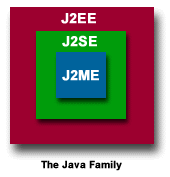
There are 3 different editions of Java platform programming, making it easier for software developers, and services & solutions providers. Java is a rich language that comes with many components, optional packages, as well as extensions – the intricate parts that make up the entire package.

Here is an introductory note to the 3 versions of Java platform:

Java SE (Standard Edition): It lets the programmer deploy and develop applications on desktops and servers, embedded and real-time environments. It includes classes that support the development of Java web services, and provides the foundation for Java platform.

Java EE (Enterprise Edition): This version of the Java platform helps you develop and deploy portable, robust, scalable, and secure server-side Java apps. It provides web services, component-model, management, and communication API for implementation to the Java platform.

Java ME (Micro Edition): It provides an environment for all the Java developers, that runs on a broad range of mobile and embedded devices, such as mobile phone, PDA, TV set-top box, printer, etc. These applications are written once for a wide range of yet exploit each device’s native capabilities.

At SPEC INDIA, we have hands on experience as we are working in this industry since more than two decades. We have successfully completed many complex projects on the Java platform. Feel free to ask if you have any queries at our email id lead@spec-india.com, I will be happy to assist you.


Read more

Java Programming: Creating & Implementing ATG Droplets

0 comments
In Java programming, creation of your own ATG droplets is an easy task. Servicing a default open parameter (oparam) in an ATG droplet is again surprisingly extremely easy.

ATG has these things called “droplets” that you use from within your “dsp” tag library. You can –nay– you SHOULD make your own droplets. You should have as little Java code in your JSP pages as humanly possible.

To do this, Java programmers need to take the following steps:
1. Create a .java file
2. Extend ‘DynamoServlet’
3. Create the .properties file
4. Define your properties
5. Implement the droplet

At SPEC INDIA, we have hands on experience as we are working in this industry since more than two decades. We have successfully completed many complex projects on the Java platform. Feel free to ask if you have any queries at our email id lead@spec-india.com, I will be happy to assist you.


Read more

Oracle ADF – Making J2EE more simple

0 comments
In programming terms, Oracle ADF (Application Development Framework) provides a commercial Java framework for building enterprise applications. It provides different approaches to Java EE development, and supports RAD.

Oracle ADF simplifies J2EE development by minimizing the need to write code that implements design patterns and application’s infrastructure. It provides these implementations as part of the framework, and is also focused on the development experience providing a visual and declarative approach to J2EE development.

The key characteristics of the Oracle ADF are:
> Platform independence
> End-to-end solution provision
> Choice of the perfect technology
> Rich development environment

At SPEC INDIA, we have hands on experience as we are working in this industry since more than two decades. We have successfully completed many complex projects on the Java platform. Feel free to ask if you have any queries at our email id lead@spec-india.com, I will be happy to assist you.


Read more
0 comments

JavaServer Pages (JSP), which came in 1999 was Sun Microsystem’s answer to ASP and PHP. JSP is the Java technology that helps Java developers serve the dynamically generated web pages based on HTML, XML and or other document types too.

To deploy and run the JSP, a compatible web server with servlet container is required. By standards of the Java developers, the JSP life cycle can be grouped and categorized into the following phases:
1. JSP Page Translations
2. JSP Page Compilation
3. Class Loading
4. Execution Phase
5. Initialization
6. Execution

SPEC INDIA has been serving the premium class of our Clients with robust solutions in Java as well as all the domains of web applications and mobile applications. We have been in this industry as a premium level IT services and solutions providers since more than 2 decades. You can write us your any requirement at lead@spec-india.com for any enquiries or free request for quote.


Read more

JQuery V/s. JavaScript

0 comments
JQuery and JavaScript; both are the structured query languages used vastly by the Java developers. We are talking this opportunity to compare both these and thus try to figure out like which best fits at what time.

Firstly – JQuery is a JavaScript library and it is easy to install by importing a script inside a Web page. It provides a lightweight library consisting of many advanced cross-browser functions to the standard language. With this, the JQuery contains a very dynamic community for more advanced components.

Now, JavaScript usage might cause some issues related to browser compatibility. JavaScript is basically a low-level programming language. It does not provide anything regarding the animations, as well as page manipulation and decoration functions. Thus, the web programmers might be somewhat less reluctant towards the JavaScript applications difficult to code, and thus resulting in high maintenance costs.


Read more

JavaFX Script

0 comments

JavaFX was introduced at javaone 2007 conference, which further made easy the task of content developers and application developers to create content rich applications for handset, smart phones, desktops, TV and many more consumer devices. The initial offering consisted of JavaFX Mobile platform and the javafx script language. The first released version was 1.3 released in April 22, 2010

The JavaFX Script programming language allows you to module up to date appearing applications with classy graphical client interfaces. To make GUI programming simpler its declarative syntax, data binding model, animation support, and fitted visual special effects let you achieve more work with less code, resulting in shorter development cycles and increased productivity.

JavaFX is particularly designed to optimize the creative procedure of building rich and forceful UI's. JavaFX originally worked with the NetBeans IDE, but it is predictable to work with other IDEs as well. JavaFX 2.0 is the subsequent step in the growth of Java as a rich client platform. It is designed to present a lightweight, hardware-accelerated Java UI platform for enterprise business applications.
Java APIs for JavaFX

  •     End-to-end Java development
  •     Java language features—generics, notes, multi-threading
  •     condensed fixed footprint of runtime and applications
  •     Fluent API design for UI construction
  •     growth in substitute languages (e.g. JRuby, Groovy) with JavaFX
  •     Control sophisticated Java IDEs, debuggers and profilers
  •     Java APIs protect suitable JavaFX Script features (e.g., bind)


    Read more